
Originally published · Last updated
How to Choose Mountain Bike Pedals
Choose between flat and clipless pedals according to terrain, footwear, skill and the need to put a foot down quickly. Neither system is universally faster or safer; the right pedal is the one the rider can operate predictably.
Flat pedals
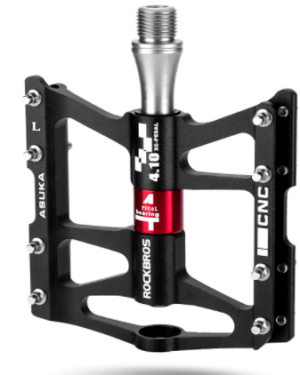
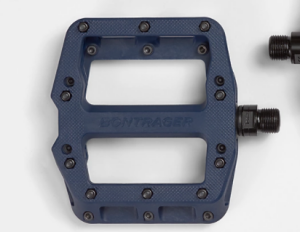
Flats work with ordinary or purpose-built flat-pedal shoes and make dabbing straightforward. Look for a platform that supports the shoe, replaceable pins, adequate cornering clearance and serviceable bearings. Very aggressive pins improve grip but can injure shins and damage casual shoe soles.
Clipless pedals
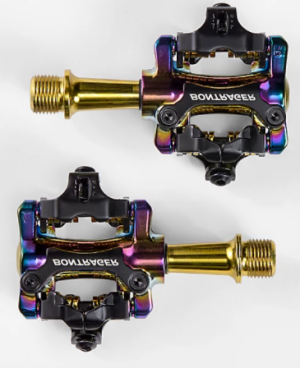
Clipless pedals require a compatible cleat and shoe. “SPD” and “SPD-SL” are not the same interface, and other brands use their own cleat families. Confirm the exact pedal-cleat combination before buying replacement cleats. Recessed two-bolt shoes are generally easier to walk in than exposed road-style systems.
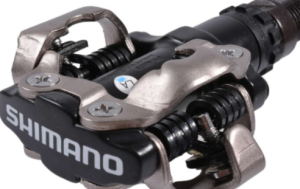
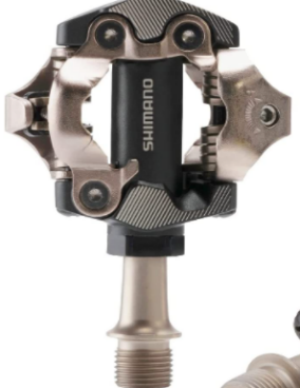
Fit the platform to the shoe and trail
A small clipless body saves weight and clears rocks, while a surrounding cage can support softer shoes and provide a target when re-engaging on rough ground. For flats, the useful platform is the area the shoe actually contacts, not the largest number in a product description. Check crank clearance, pedal thread size and whether replacement pins, axles and bearings are available.
Set up clipless pedals safely
- Install cleats with the specified hardware and torque from the shoe, cleat and pedal instructions.
- Begin with lower release tension when the pedal provides adjustment.
- Practice clipping out with both feet while leaning against a wall or using a stationary support.
- On a traffic-free surface, unclip well before stopping until the movement is automatic.
- Inspect cleats and retention parts for wear; an easy entry is not proof that release remains reliable.
Also inspect pedal-body play, bent axles, missing pins and damaged threads after rock strikes. Cleat position affects comfort and control, so begin near the shoe maker’s neutral reference and make small changes. Stop and reassess if clipping in creates new knee, foot or ankle pain rather than trying to solve it only with higher spring tension.
Bottom line: choose flats for simple, immediate foot placement; choose clipless when you value retention and are willing to learn and maintain the interface.
Sources
Technical and safety pages checked August 24, 2026.