

Short answer: the Trek 830 can still be a good bike if you want a simple steel 26-inch bike for commuting, greenways, or easy gravel—and if the particular bike fits you and passes a careful inspection. It is a much less convincing choice for riders expecting modern trail geometry, disc brakes, or current suspension performance.
The important detail is that “Trek 830” does not describe one fixed specification. Trek sold the model across multiple years, and the drivetrain, frame tubing, brakes, and sizes varied. Trek also sold separate 830SHX suspension variants in some years. A 1986 Antelope and a 1996 830 share the 830 model number, but they are not the same bike.
Research note: this is a research-based review, not a hands-on or long-term ride test. We checked Trek’s archived catalogs and period specifications, then evaluated the practical risks of buying a decades-old used bike.
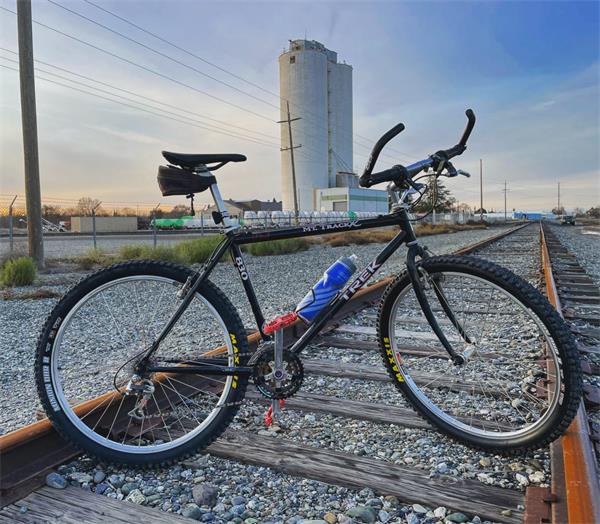
Quick Verdict
Buy it when: the frame and fork are sound, the size is right, the brakes and wheels work properly, and the total price leaves room for overdue service. In that condition, an 830 can be a practical commuter, campus bike, rail-trail bike, or vintage rebuild.
Skip it when: there is structural rust, a crack or unexplained dent, a seized seatpost, badly worn rim braking surfaces, or a repair bill that brings the total close to a newer bike. Also skip it if your main goal is steep, rough, or technical trail riding.
Which Trek 830 Are You Looking At?
Trek’s official archive confirms the 830 in at least the 1986, 1987, 1988, 1996, and 1997 catalogs. Some summaries say production began in 1988, but Trek’s 1986 catalog already includes the 830 Antelope. We have not found enough primary evidence to state an exact first or final production year, so the safest approach is to identify the individual bike rather than assume every 830 is alike.
| Verified year | What Trek’s catalog shows | Why it matters today |
|---|---|---|
| 1986 | 830 Antelope, steel rigid fork, 3×5 drivetrain, 26-inch wheels | It is a 15-speed period bike, not the 21-speed setup found on later examples. |
| 1987 | 830 Antelope, double-butted chromoly frame and rigid fork, Shimano SIS | Condition and originality can differ greatly after nearly four decades. |
| 1988 | Tange triple-butted chromoly, 3×6 drivetrain, front cantilever and rear U-brake | Brake layout, sizing, and replacement needs differ from a mid-1990s bike. |
| 1996 | Base 830 with rigid fork; 3×7 drivetrain with an Acera-X crank/front derailleur and Alivio rear derailleur; Weinmann 519 rims and 26×2.1 tires | This is the model year represented by the specification table later in this review. |
| 1997 | True Temper chromoly main tubes and stays, 3×7 drivetrain, rack mounts | It shares the 830 model number but has its own tubing, sizes, controls, and listed weight. |
The basic 1996 and 1997 830 models used rigid forks, but Trek also listed separate 830SHX versions with suspension. A blanket statement that “the Trek 830 has no suspension” is therefore incomplete. Look for a year label, catalog-matching paint and graphics, frame details, and the components actually fitted to the bike. Decades of repairs and upgrades may matter more than the original brochure.
Who Is the Trek 830 For?
A Good Match
- Riders who like a straightforward, repairable vintage steel bike.
- Commuters and students riding mostly pavement, greenways, and firm paths.
- Buyers who can inspect a used bike or budget for a shop assessment.
- Projects where verified rack or bottle mounts on the exact model year are more valuable than trail speed.
Probably the Wrong Bike
- Riders planning drops, jumps, or fast technical descents.
- Anyone who needs modern hydraulic disc braking and current trail geometry.
- Buyers who cannot test the fit or inspect corrosion and crash damage.
- People expecting a cheap purchase to need no immediate maintenance.
How the Trek 830 Fits Today
Commuting, Campus Riding, and Greenways
This is where a sound Trek 830 makes the strongest case. The steel frame, conventional components, 26-inch wheels, and mounting points cataloged on some years—including 1986 and 1997—can support a practical build. Appropriate road or mixed-surface tires, fresh brake pads and cables, and a properly fitted rack may be more useful than preserving every original part.
That is an editorial assessment based on the period design—not a claim that we performed a commute test. Load carrying also depends on the rack, fasteners, frame condition, and the limits specified by each component. The frame material alone does not prove a safe cargo capacity.
Gravel Roads and Light Trails
When tuned correctly and fitted with suitable tires, an 830 can make sense on smooth dirt roads and non-technical paths. The rigid fork is not automatically unsafe; rigid mountain bikes were normal in the period. The real limits are the condition of the bike, braking performance, tire grip, rider skill, older geometry, and the difficulty of the route.
For comparison, the Trek 800 review covers another steel model from the same broad family. Neither article should be used as permission to ride an uninspected vintage bike on demanding terrain.
Fit Matters More Than the Badge
Do not use one universal Trek 830 size chart. Trek’s catalogs show different size ranges by year, and some years include separate W frame options. Check the actual frame size, stand-over clearance, reach, saddle position, and whether the seatpost and stem can be adjusted safely. A correctly sized lower-spec bike is a better purchase than a desirable model that does not fit.
Used Trek 830 Inspection Checklist
On a bike this old, condition is more important than a long list of original components. Inspect the following before discussing value:
- Frame and fork: look for cracks, dents, bent tubing, bubbling paint, serious rust, and signs of a collision—especially around welds, dropouts, the head tube, bottom bracket, and fork crown.
- Inside the frame: remove the seatpost only if it can be done safely and check for corrosion or a seized post. A stuck post can turn a bargain into an expensive project.
- Wheels and rim brakes: spin both wheels, check for side-to-side movement, broken spokes, hub play, and worn or concave rim braking surfaces.
- Brakes and controls: confirm that the levers, cables, housing, pads, and brake arms move freely and stop the bike. Old rubber and corroded cables are normal service items, not cosmetic details.
- Drivetrain: shift through every gear under light load and inspect chain, chainrings, freewheel or cassette, derailleurs, and shifters for wear or damage.
- Bearings: check the headset, bottom bracket, pedals, and hubs for looseness, grinding, or binding.
- Tires: assume period-original tires are too old for dependable use. Check sidewalls, tread, tubes, and the rim tape, then budget for replacement if their age is unknown.
- Fit and test ride: verify safe saddle insertion, steering, braking, tracking, and comfort. If the seller will not allow a reasonable inspection, walk away.
Safety note: do not assume a steel frame is safe because it still looks straight. Stop riding and ask a qualified bicycle mechanic to inspect any crack, significant dent, severe corrosion, loose fork, or evidence of crash damage.
1996 Trek 830 Specifications: One Example, Not Every Year
Specification lists circulated online often present the following equipment as universal to the Trek 830. Trek’s 1996 specification catalog shows that it belongs specifically to the base 1996 Trek 830. A used example may now have different wheels, controls, saddle, brakes, or drivetrain parts.
| Area | 1996 catalog specification |
|---|---|
| Frame | Oversize Cro-Moly main triangle with high-tensile stays |
| Fork | Trek Cro-Moly rigid fork |
| Shifters | GripShift SRT-300 |
| Drivetrain | Shimano Acera-X 24/34/42 crank and front derailleur, Alivio rear derailleur, and 7-speed 11–28 gearing (21 combinations) |
| Brakes | Shimano Altus C90 cantilever brakes |
| Rims and spokes | Weinmann 519, 32-hole; Marwi USA stainless spokes |
| Tires | Trek Kahuna 26×2.1 |
| Listed weight | 27.81 lb in Trek’s catalog; actual weight varies with size and replacement parts |
| Listed sizes | 13.5, 16.5, 18, 19.5, 21, and 22.5 inches; 17W and 20W also listed |
The 1986 catalog listed a 15-speed drivetrain, while the 1988 catalog showed an 18-speed setup. That is why “21 speed” should never be treated as a feature of every Trek 830.
Trek 830 Pros and Cons
Pros
- Simple vintage design that many bicycle shops can assess and service.
- Steel construction and conventional 26-inch format suit practical rebuilds.
- Trek’s 1986 and 1997 catalogs list useful rack and bottle mounting options.
- Plausible practical role as a commuter, greenway, or light-gravel project.
Cons
- Age-related corrosion, seized parts, and rim wear can exceed the purchase price.
- Original rim brakes and geometry do not match a current trail hardtail.
- Year-to-year variation makes online specifications easy to misapply.
- Some exact vintage replacement parts may require extra searching or adaptation.
How Much Is a Trek 830 Worth Today?
There is no responsible single price for every Trek 830. Year, size, location, originality, cosmetic condition, structural condition, and recent service all change the result. On August 23, 2026, Bicycle Blue Book’s U.S. model-year card displayed $372–$432 for the 1996 model before bike-specific condition details. That figure is neither a verified sale price nor a local-market valuation, and it should not be applied to another model year.
Work backward from the total cost. Add the purchase price to the likely cost of tires, tubes, cables, brake pads, chain, bearing service, wheel work, and shop labor. A cheaper bike that immediately needs several of those items may be worse value than a serviced example with a higher asking price.
For another period comparison, read the Trek 850 review and our related Trek 800 guide. Compare condition, fit, and repair cost—not just the model number.
Trek 830 Alternatives
Restore a Good Trek 830
If the attraction is the steel frame, 26-inch wheels, and vintage appearance, a structurally sound 830 with sensible service may be the closest match. Do not confuse originality with reliability: fresh consumables and correctly adjusted brakes are more important than keeping unsafe old rubber.
Trek 820: Another Used Steel Trek
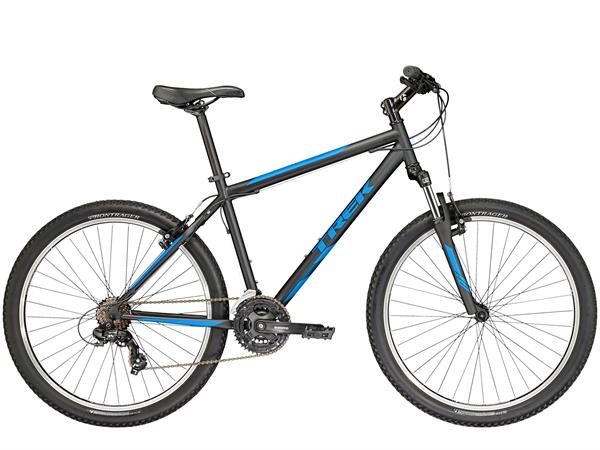
A used Trek 820 can fill a similar practical role, but it must be judged by its own year and condition. Avoid assuming that every 820 has the same fork or drivetrain. See our Trek 820 review for a separate overview.
Trek Marlin 4 Gen 3: A Modern Trail-Oriented Direction
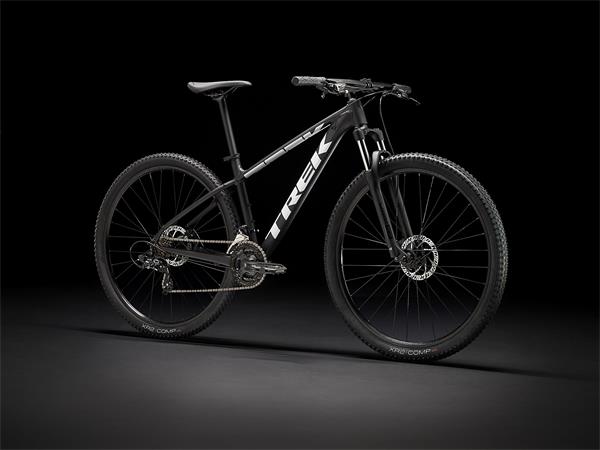
For a new bike with modern mountain-bike priorities, the current Marlin 4 Gen 3 is a more appropriate starting point. Trek’s selected U.S. product card checked on August 23, 2026 listed an aluminum frame, an 8-speed Shimano ESSA drivetrain, an SR Suntour XCM 30 fork with 110 mm of travel, and rack and kickstand mounts; verify the exact size and configuration before buying. These details may differ from earlier Marlin generations. Read our existing Trek Marlin 4 review, then confirm the latest official specification.
A Fitness or Light-Gravel Bike
If your real use is pavement and easy unpaved paths, a fitness or all-road bike may suit you better than a trail hardtail. The current Specialized Sirrus X 2.0, for example, combines a rigid fork, 700×42c tires, hydraulic disc brakes, and rack and fender mounts. It is not a modern copy of the Trek 830; it is an alternative based on how many owners use an old 830 today.
Retail Links and Version Checks
The comparison links below lead to search or retail pages. Products, generations, sellers, availability, and specifications can change, so treat each link as a starting point and verify the exact item on the destination page. The table intentionally avoids component claims that may no longer match the current listing.
| Comparison | Use this link for | Link |
|---|---|---|
| Trek 820 | Searching Trek’s site; this is not proof of a current 820 specification | Search Trek |
| Trek Marlin 4 | Checking current Trek search results and available generation | Search Trek |
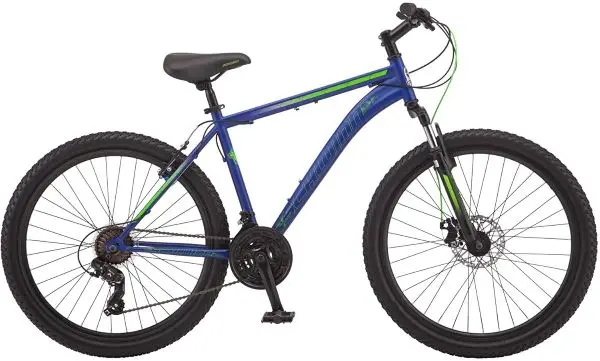
| Schwinn Sidewinder | Checking the exact Walmart listing, seller, size, and current specification | Check Listing |
| Schwinn Bonafide | Verifying the frame material and all current specifications on the exact Amazon listing | Check Listing |
For broader categories and price levels, our mountain bikes under $2,000 guide is part of the site’s related coverage. Because it was published earlier, recheck every model, price, and specification before making a buying decision.
Our separate Schwinn Sidewinder review provides more context for that model, but always match the review to the exact retail version.
Trek 830 FAQ
Is the Trek 830 a good mountain bike?
It was sold as an all-terrain or mountain bike in its era, and a sound example can still handle appropriate easy terrain. It should not be judged as a substitute for a modern trail hardtail. Its age, brakes, tires, geometry, and mechanical condition set the limits.
How many speeds does a Trek 830 have?
It depends on the year and later modifications. Verified catalog examples include 15 speeds in 1986, 18 in 1988, and 21 combinations on the base 1996 and 1997 models.
How much does a Trek 830 weigh?
There is no one correct weight. Trek’s catalogs list approximately 28.9 lb for verified 1986 and 1987 examples, 27.81 lb for the base 1996 model, and 29.0 lb for the base 1997 model. Frame size, accessories, tires, and replacement parts change real weight.
What is the Trek 830 weight limit?
We did not find a model-year-specific Trek primary source supporting a 300 lb figure sometimes repeated online. Ask Trek or a qualified shop about the exact frame, wheels, rack, and installed components instead of applying a modern limit to a vintage bike.
Does the Trek 830 have suspension?
Many base 830 models used rigid forks. Trek also cataloged separate 830SHX suspension versions in at least 1996 and 1997, so inspect the specific bike and identify its year.
What size Trek 830 should I buy?
Use the actual frame measurement and a test fit, not a universal list. Verified size ranges differ between 1986, 1988, 1996, and 1997, and some catalogs include W-specific frames.
Final Verdict
The Trek 830 is not automatically a great buy because it has a steel frame, and it is not automatically obsolete because it is old. A correctly sized, structurally sound, recently serviced example can be a satisfying commuter, greenway bike, or light-gravel project. A neglected example with corrosion, worn rims, old tires, or seized parts can cost more than it first appears.
The answer to “Is the Trek 830 a good mountain bike?” is therefore conditional: yes for period-appropriate riding and practical everyday use when the individual bike is safe and well maintained; no as a direct replacement for a modern bike built for aggressive technical trails.
Sources and Scope
- Trek Catalog Archive
- 1986 Trek Catalog (830 Antelope on PDF page 17)
- 1987 Trek Catalog (PDF page 16)
- 1988 Trek Catalog (PDF page 19)
- 1996 Trek Specification Catalog (PDF page 18; printed pages 32–33)
- 1997 Trek Specification Catalog (PDF page 16; printed pages 28–29)
- Bicycle Blue Book: 1996 Trek 830 (price-guide context only)
- Trek Marlin 4 Gen 3 and Specialized Sirrus X 2.0, checked August 23, 2026