

Originally published · Last updated
Short answer: a Trek 7000 can be an appealing vintage mountain bike, but the model name covers materially different builds. Trek’s 1991 specification shows a rigid-fork, 3×7, 26-inch aluminum bike; the 2000 specification shows an Alpha ZX aluminum frame, 80mm Manitou suspension fork, 3×9 drivetrain, and linear-pull brakes. Condition, year, fit, and repair cost matter far more than the badge alone.
The Trek 7000 should be identified by model year, frame details, fork, drivetrain, brakes, serial information, and catalog match. Trek’s official catalog archive includes both 1991 and 2000 records, which demonstrate why a single universal specification is misleading. This guide treats those two documented examples separately and focuses on buying and riding a decades-old bicycle safely.
Quick Verdict
Choose it when: you enjoy vintage 26-inch mountain bikes, can inspect or service older parts, and want a lively bike for roads, paths, and moderate terrain appropriate to its condition.
Skip it when: you need modern trail geometry, hydraulic discs, current tire and suspension standards, an easy warranty path, or a bike that can be ridden hard without a thorough structural and mechanical inspection.
Who This Bike Suits
A Good Match
- Vintage-bike enthusiasts who value the 7000’s aluminum-era Trek history.
- Riders seeking a path, town, or light-duty off-road project after professional inspection.
- Home mechanics who understand older drivetrains, rim brakes, headsets, and wheel standards.
- Buyers willing to choose by actual fit and condition rather than nostalgia alone.
Probably the Wrong Bike
- Riders planning jumps, bike-park laps, or modern technical trails.
- Buyers who need guaranteed compatibility with current suspension, wheels, and drivetrains.
- Anyone unable to evaluate an aged aluminum frame, fork, brakes, and wheels before riding.
- Shoppers expecting every Trek 7000 to share the same year, parts, or geometry.
What to Expect from a Trek 7000
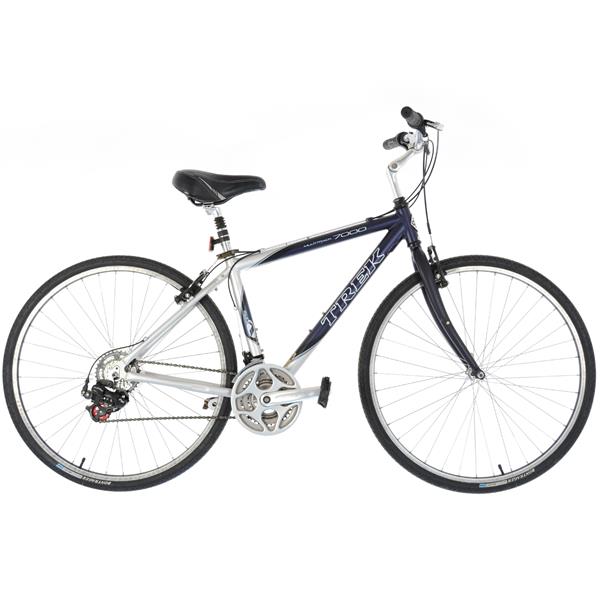
Both documented versions use 26-inch wheels and aluminum frames, but they represent different stages of mountain-bike design. The 1991 bike uses a rigid fork and 3×7 system. The 2000 bike adds an 80mm suspension fork, 3×9 gearing, and linear-pull brakes. Either can feel direct and agile on suitable surfaces; neither should be judged by modern trail-bike expectations.
1991 Trek 7000 Character
Trek’s 1991 specification lists bonded Easton 6061 E9 double-butted aluminum tubing, a rigid fork, Shimano Deore LX/DX components, seven-speed HyperGlide gearing, Matrix wheels, and SLR Deore DX brakes. The rigid front end and period-correct 26-inch setup point toward a precise, lively ride on roads and smoother dirt rather than high-speed impact absorption.
Age changes the decision. Adhesive-bonded joints, aluminum tubes, fork, wheels, bar, stem, and seatpost all need close inspection. No calendar age alone proves failure, but no vintage reputation proves structural safety either.
2000 Trek 7000 Character
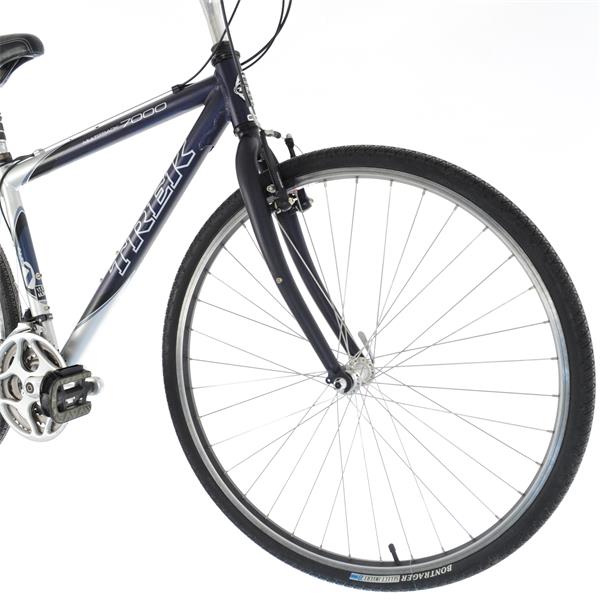
The 2000 specification lists an Alpha ZX aluminum frame, Manitou SX fork with 80mm travel, Shimano Deore LX RapidFire+ controls, Deore LX front derailleur, Deore XT SGS rear derailleur, Avid Single Digit 1.0 brakes, and a 44/32/22 by 11-32 nine-speed drivetrain.
Trek listed the complete bike at 25.6 lb / 11.62 kg. That is light for a period suspension hardtail, but the short fork travel, 26-inch wheels, quick-release axles, narrow cockpit, and rim brakes still set clear limits on rough modern trails.
Components That Matter
Frame and Fork Identification
The 1991 page describes an Easton 6061 E9 bonded aluminum construction and a rigid fork. The 2000 page specifies Alpha ZX aluminum and an 80mm Manitou SX. A suspension fork installed on a 1991 frame may be a later modification and must be checked for axle-to-crown length, steerer compatibility, brake mounts, condition, and effect on handling.
Deep dents, cracks, bulges, separation at joints, serious corrosion around fittings, misaligned dropouts, or evidence of a major impact are reasons to stop the inspection and consult a qualified frame specialist. Do not sand or repaint suspicious areas merely to improve appearance.
Drivetrain Differences
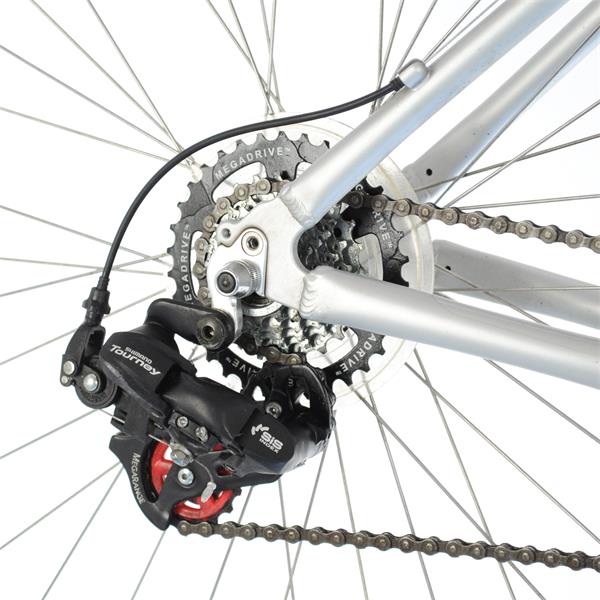
The 1991 record uses a 3×7 Shimano system; the 2000 record uses a 3×9 setup with a 44/32/22 crank and 11-32 cassette. Replacement options, freehub compatibility, shifter indexing, chain width, and derailleur capacity depend on the installed generation.
Check every chainring and rear cog, measure chain wear, inspect crank and bottom-bracket play, and test shifts without forcing them. Mixing unmatched vintage and modern parts can create poor indexing or unsafe assembly.
Rim Brakes and 26-Inch Wheels
Both examples rely on rim braking, although the brake designs differ by year. The 2000 bike uses Avid linear-pull brakes; the 1991 catalog lists SLR Deore DX braking equipment. The rim sidewalls are structural wheel parts and braking surfaces at the same time.
Inspect each rim for concavity, cracks, dents, loose eyelets, and excessive wear. Check pads, cables, housing, lever travel, wheel trueness, hubs, spokes, and quick releases. Replacement 26-inch tires remain available, but the desired casing, width, and tread may require searching.
Suspension Service on the 2000 Bike
A surviving Manitou SX may be original, rebuilt, replaced, or neglected. Smooth movement during a parking-lot test does not confirm internal condition. Check for bushing play, corrosion, leaks, damaged adjusters, crown or steerer problems, and uncertain service history.
Parts and service knowledge for a period fork can be limited. A compatible replacement must respect the frame, headset, steerer, axle, brake, and geometry requirements. The cheapest fork that physically fits is not automatically a safe solution.
Fit, Comfort, and Everyday Use
Vintage sizing labels do not map cleanly to every current bike. The 1991 catalog lists multiple numeric frame sizes, while the 2000 page uses XS through XL and size-specific stems and geometry. Measure the actual frame and test stand-over, reach, saddle height, brake reach, toe clearance, and low-speed steering.
Older cockpits can be long and low by modern standards. A shorter stem or different bar may help within compatibility limits, but fit changes should not hide a frame that is fundamentally the wrong size. Check the minimum-insertion marks on both stem and seatpost.
Limitations to Consider
The main risk is not that every old aluminum bike is automatically unsafe; it is that history is often unknown. Crashes, corrosion, indoor-trainer sweat, overtightened clamps, stuck posts, poor repairs, and long-neglected wheels can all matter. A careful inspection is part of the purchase, not an optional upgrade.
Modern trail components are not always simple bolt-ons. Wheel diameter, hub spacing, brake mounts, steerer dimensions, headset type, bottom bracket, freehub, tire clearance, and geometry all constrain upgrades. Restoration value and riding value can also point in different directions.
- Identify the year using serial information, decals, frame construction, catalog details, and installed parts.
- Inspect the entire frame and fork, including joints, dropouts, steerer, crown, bottom bracket, and seat cluster.
- Check rim-wall wear, wheel trueness, hubs, spokes, quick releases, tires, tubes, pads, and cables.
- Test headset, bottom bracket, crank, pedals, and both derailleurs for play or binding.
- Budget for immediate tires, brake service, cables, chain, bearings, and suspension work before valuing the bike.
Specifications for the Model Discussed
| 1991 frame | Bonded Easton 6061 E9 double-butted aluminum tubing |
|---|---|
| 1991 fork and drivetrain | Rigid fork; Shimano 3×7 with Deore LX/DX-era equipment |
| 1991 wheels and brakes | 26-inch Matrix wheel system; SLR Deore DX braking equipment |
| 2000 frame and fork | Alpha ZX aluminum; Manitou SX, 80mm |
| 2000 drivetrain | 3×9; 44/32/22 crank; 11-32 cassette; LX/XT mix |
| 2000 brakes | Avid Single Digit 1.0 linear-pull |
| 2000 wheels | 26-inch Bontrager Superstock with Jones AC tires |
| 2000 listed weight | 25.6 lb / 11.62 kg |
2026 Trek 7000 Status: A Vintage Name, Not a New Model
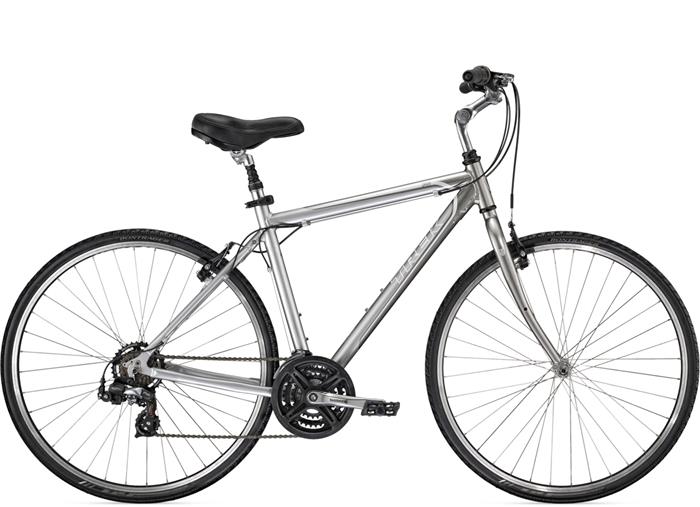
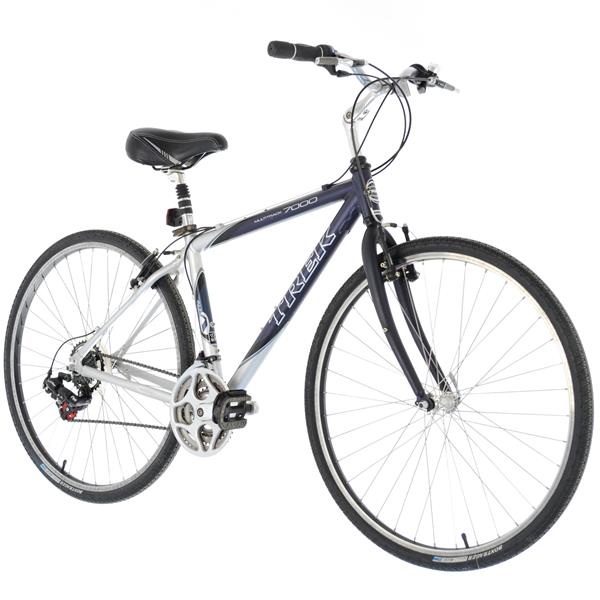
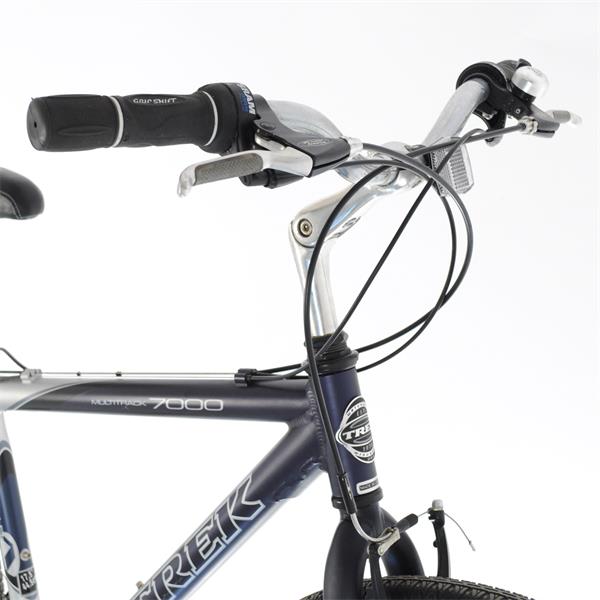
Trek does not list a new 2026 Trek 7000 mountain bike. However, Trek’s official 7000 product archive adds an important identification detail: the name was also used for an archived 2011-2012 comfort hybrid, model 13100000111. That later bike has 700x35c wheels, a rigid steel fork, 3×7 gearing, linear-pull brakes, an adjustable stem, and a suspension seatpost. It is not the same kind of bicycle as the 1991 or 2000 mountain bikes discussed above.
| Version | Identity | Fastest visual checks | Best use now |
|---|---|---|---|
| 1991 Trek 7000 | Rigid aluminum mountain bike | 26-inch wheels, rigid fork, early 3×7 equipment | Restoration, paths, light recreation, or period-correct collection |
| 2000 Trek 7000 | 26-inch hardtail mountain bike | Manitou suspension fork, 3×9 drivetrain, V-brakes | General recreation and mild trails after a complete mechanical inspection |
| 2011-2012 Trek 7000 | Comfort hybrid | 700x35c wheels, rigid fork, adjustable stem, suspension seatpost | Paved paths, errands, and relaxed fitness riding |
Why the Exact Year Matters More Than the Name
A listing that says only “Trek 7000” is not specific enough to price or evaluate. Ask for the serial number, wheel size, clear drivetrain-side photos, fork type, and brake type before traveling to see the bike. A 2011-2012 hybrid should not be valued as a collectible early aluminum mountain bike, while a 1991 or 2000 mountain bike should not be judged by the hybrid’s comfort-oriented specification.
A Short Inspection List for Any Trek 7000
- Confirm the year and frame identity before ordering parts.
- Check the frame around joints, dropouts, bottle bosses, and the bottom bracket for cracks or corrosion.
- Test every gear under moderate pedal pressure and measure chain wear.
- Inspect rims and brake tracks; replacement 26-inch and older rim-brake parts vary in availability.
- On suspension-equipped versions, treat an unverified fork as a likely service or replacement cost.
- Budget for tires, tubes, cables, housing, pads, bearings, and a professional safety check after long storage.
Value and Alternatives
A Trek 7000 is worth buying when the frame is sound, the size works, and the total repair cost still makes sense. A collector may value original parts, while a daily rider may value reliable replacements; those goals can conflict. The existing links below lead to current Trek searches, modern alternatives, and related guides. Compare use, safety, parts availability, and total cost rather than treating a vintage model as a cheaper version of a new trail bike.
- Click View
- Click View
- Click View
- Click View
- Is The Trek X-Caliber 8 Worth Buying? [Trek X-Caliber 8 Review]
- Trek Marlin 7
- Is Trek Marlin 6 Worth Buying? [Trek Marlin 6 Review]
- Is Trek Marlin 5 Worth Buying? [Trek Marlin 5 Review]
- Schwinn High Timber
- Click View The Latest Offers
- Is The Trek 7200 A Good Hybrid Bike?
- https://jimlangley.net/bicycle_spec/92_93/7000.html
FAQ
What year is a Trek 7000?
The name appeared in multiple years. This guide documents official 1991 and 2000 specifications, which are different. Identify the actual bicycle before assigning a year.
Is a Trek 7000 good for modern mountain-bike trails?
It can suit roads, paths, and moderate terrain when inspected and ridden within its condition and design limits. Modern technical trails, jumps, and high-speed impacts call for a more suitable current bike.
How much is a Trek 7000 worth?
There is no universal value. Year, size, originality, frame condition, fork condition, service history, local demand, and immediate repair cost determine a rational price.
Should I install disc brakes?
Do not assume a disc conversion is supported. The documented frames and forks use rim brakes, and a proper conversion depends on dedicated mounts, compatible wheels, structural suitability, and complete parts. A different bike is often the safer and more economical answer.
Does aluminum automatically fail after a fixed number of years?
No fixed calendar date determines frame safety. Fatigue, impacts, corrosion, design, use, storage, and repairs all matter. Because history is often uncertain, inspect the specific frame rather than relying on age alone.
Final Verdict
The Trek 7000 remains interesting because it captures two distinct eras of aluminum hardtail design. The 1991 and 2000 bikes can still be enjoyable for suitable riding, but neither should be bought on nostalgia or model name alone. Confirm the year, inspect the structure and wheels, price the service work, and choose a modern mountain bike when the intended terrain exceeds vintage standards.
Sources
Manufacturer specifications and model identity were checked on August 23, 2026. Use the model year and model number when comparing a bicycle for sale.
- Trek catalog archive: https://www.trekbikes.com/us/en_US/catalog-archive/
- Trek 1991 specification catalog: https://media.trekbikes.com/image/upload/v1779307234/1991_Trek_Spec_Catalog.pdf
- Trek 2000 specification catalog: https://media.trekbikes.com/image/upload/v1779307221/2000_Trek_Spec_Catalog.pdf