
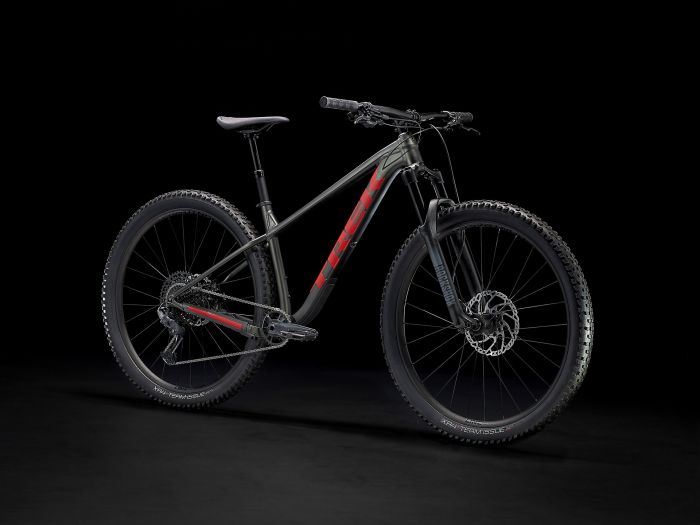
Short answer: the archived 2022–2023 Trek Roscoe 8 is a strong choice for riders who want a capable trail hardtail rather than a lightweight cross-country bike. Its 140mm fork, 2.6-inch tires, four-piston brakes, dropper post, and sturdy wheel standards give it meaningful control on rough trails. The tradeoff is a less forgiving rear end than a full-suspension bike, plus more tire and fork to push on long, smooth climbs.
This is Trek’s 2022–2023 Roscoe 8, model 5260381. Wheel size, parts, price, and geometry can change between generations and markets, so identify the exact bike before using the specification list below.
Quick Verdict
Choose it when: you want one hardtail for trail centers, technical singletrack, and everyday local rides; you value strong braking and simple rear-suspension-free maintenance; and you are comfortable setting up an air fork and tubeless tires.
Skip it when: your riding is mostly pavement or smooth cross-country, you prioritize the lowest possible weight, or recurring roots and rocks make rear suspension important for comfort and control. A used example with suspension leaks, wheel damage, brake problems, or an uncertain frame history also needs a shop inspection before purchase.
Which Trek Roscoe 8 Is This?
Trek’s official product archive labels this Roscoe 8 as a 2022–2023 model and identifies it as model 5260381. That detail matters. A current Roscoe 8 or an earlier generation may use different suspension, wheels, brakes, drivetrain parts, colors, and pricing.
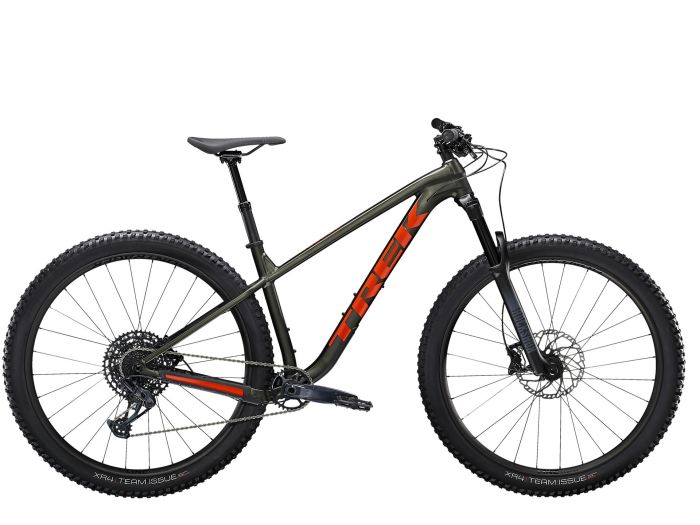
The archived bike uses an Alpha Gold Aluminum frame, a 140mm RockShox 35 Gold RL fork, Boost thru-axles, tubeless-ready Line Comp 30 rims, XR4 2.6-inch tires, a mixed SRAM NX/GX Eagle drivetrain, Shimano four-piston brakes, and a size-specific TranzX dropper post. Trek also warns that compatible parts may have been substituted during production. Check the parts actually installed on any bike you are considering.
A Good Match
- Trail riders who want more descending confidence than a short-travel XC hardtail offers.
- Riders who prefer a hardtail’s direct feel and simpler rear-end maintenance.
- Buyers who value a dropper post, four-piston brakes, thru-axles, and tubeless-ready wheels from the start.
- Newer mountain bikers who will begin on suitable trails and learn setup, braking, and line choice progressively.
Probably the Wrong Bike
- Road, fitness, or rail-trail riders who do not need 140mm of fork travel or aggressive tires.
- Riders who need rear suspension to reduce fatigue on repeated square-edge impacts.
- Weight-focused cross-country racers seeking fast tires and a more efficient race-oriented build.
- Anyone tempted by the model name but unable to test the size or inspect a used bike.
How the Roscoe 8 Should Ride
The Roscoe 8’s equipment points toward technical trail use, not casual touring. A 140mm air fork, wide trail tires, long-drop seatpost, large brake rotors, and four-piston calipers are all choices aimed at control when terrain becomes steep or rough. Actual ride feel still depends on fit, setup, terrain, tire pressure, and rider technique.
Climbing
The 30-tooth chainring and 11–50 cassette provide an appropriately low climbing gear for steep trail approaches. The drivetrain is a simple 1×12 system, so the rider only manages one shifter. That helps concentration on uneven climbs, although it does not make the bike automatically faster.
Trek lists 13.54 kg / 29.86 lb for a medium with tubeless sealant and no tubes. That is reasonable for a robust trail hardtail, but the 2.6-inch tires and 140mm fork favor grip and control over the quick response of an XC build. On smooth fire-road climbs, tire pressure and tread condition will noticeably affect effort.
Descending and Cornering
The 35mm-stanchion RockShox fork, large-volume tires, dropper post, and four-piston brakes form a sensible control package. Lowering the saddle creates room to move on descents. The wide tires can add traction and some impact isolation when pressure is set correctly, while the hydraulic brakes reduce the hand force needed to manage speed.
There is still no rear suspension. The rear wheel transmits more trail feedback than a full-suspension bike, especially through repeated roots, braking bumps, and rocks. Technique, tire pressure, and line choice therefore matter. No specification can promise that the bike will feel smooth on every trail or keep a rider safe on terrain beyond their ability.
Components That Matter
Mixed SRAM NX/GX Eagle Drivetrain
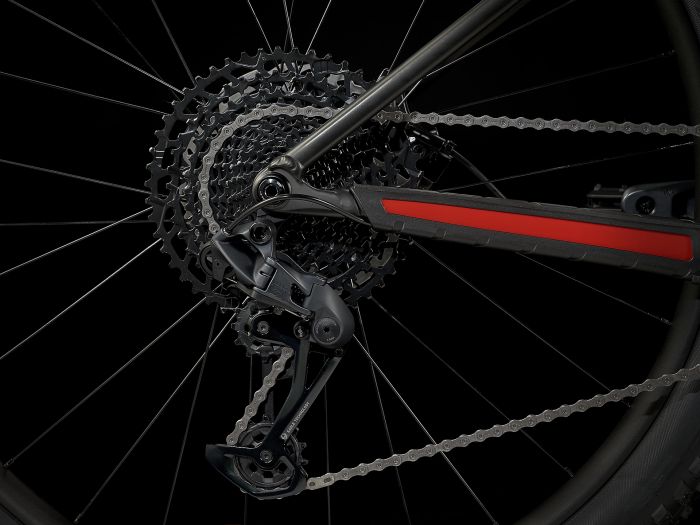
Trek specifies a mixed Eagle drivetrain: an NX Eagle 12-speed shifter and chain, a GX Eagle rear derailleur, an X1 DUB crank, and a PG-1230 11–50 cassette. It is not a complete GX group.
The practical benefit is broad trail gearing and straightforward one-lever shifting. The 11–50 cassette provides about a 455% range. On a used bike, check chain wear, cassette teeth, derailleur alignment, clutch action, and shifting under light load. A worn 12-speed drivetrain can turn an attractive price into a substantial parts bill.
XR4 Tires and Line Comp 30 Wheels
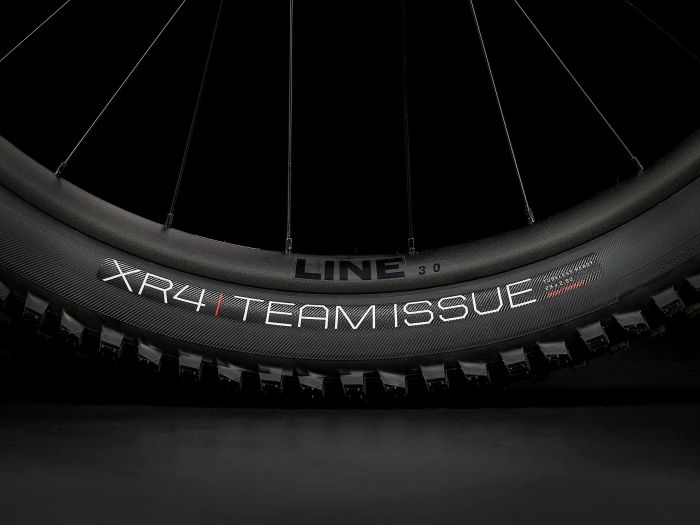
Trek lists Bontrager XR4 Team Issue 120 tpi tires and Line Comp 30 tubeless-ready rims. Wheel size depends on frame size: XS uses 27.5×2.60 tires, while S, M, ML, L, and XL use 29×2.60 tires.
Tubeless compatibility can let a rider use lower pressure without the same pinch-flat risk as a tube, but it still requires sound rim tape, valves, sealant, compatible tires, and correct installation. On a used Roscoe, ask when the sealant was last refreshed and inspect the tire casing and rim for damage. Do not assume the original setup is still airtight.
RockShox 35 Gold RL Fork
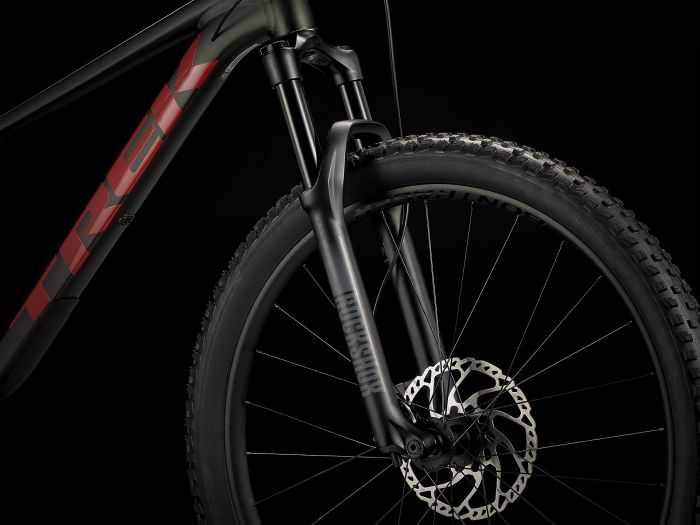
Trek lists 140mm of travel, a DebonAir spring, Motion Control damping, lockout, a tapered steerer, and Boost110 thru-axle spacing. XS receives a 37mm offset; S through XL use 44mm. The 35mm chassis is consistent with the bike’s trail focus.
An air fork must be adjusted for rider weight and riding style. Pressure, sag, rebound, and volume spacers affect behavior; lockout is not a substitute for correct setup. Inspect used forks for oil residue, scratched stanchions, bushing play, unusual noise, and overdue service. RockShox publishes model-specific service documents, and internal service should be handled by someone with the required tools and knowledge.
Shimano Four-Piston Brakes and Dropper Post
Trek specifies an MT4100 lever with an MT420 four-piston caliper and RT66 rotors. Shimano describes the MT420 as a four-piston hydraulic caliper designed for consistent braking and reliable stopping power. This is a fully hydraulic brake system; it does not use a brake cable.
Rotor size is listed as 203mm and 180mm, giving the bike a useful braking package for trail riding. Brake performance still depends on correct bed-in, pad condition, rotor condition, fluid service, setup, and rider technique. Any spongy lever, fluid leak, contaminated pad, cracked hose, or unusually thin rotor deserves attention before riding.
The TranzX dropper travel changes with size: 100mm on XS and S, 130mm on M, and 150mm on ML through XL. A dropper changes saddle position; it does not provide rear suspension or damping. On a used bike, confirm full extension, controlled return, minimal unwanted movement, and smooth remote operation.
Fit and Wheel Size
Trek offered XS, S, M, ML, L, and XL. The chart below is a starting point, not a substitute for a test ride. Riders near a boundary may prefer different reach and handling, and torso, arm, mobility, and riding style can matter as much as total height.
| Size | Rider height | Inseam | Wheel size |
|---|---|---|---|
| XS | 137–155 cm / 4′6″–5′1″ | 64–73 cm / 25″–29″ | 27.5×2.60″ |
| S | 153–167 cm / 5′0″–5′6″ | 72–79 cm / 28″–31″ | 29×2.60″ |
| M | 161–172 cm / 5′3″–5′8″ | 76–81 cm / 30″–32″ | 29×2.60″ |
| ML | 166–179 cm / 5′5″–5′10″ | 77–84 cm / 30″–33″ | 29×2.60″ |
| L | 177–188 cm / 5′10″–6′2″ | 83–88 cm / 33″–35″ | 29×2.60″ |
| XL | 186–196 cm / 6′1″–6′5″ | 87–92 cm / 34″–36″ | 29×2.60″ |
Check stand-over clearance, seated reach, handlebar position, knee comfort, and whether the dropper lets you reach the correct pedaling height. Do not choose XS only to obtain 27.5-inch wheels or size up merely for 29-inch wheels—the frame must fit first.
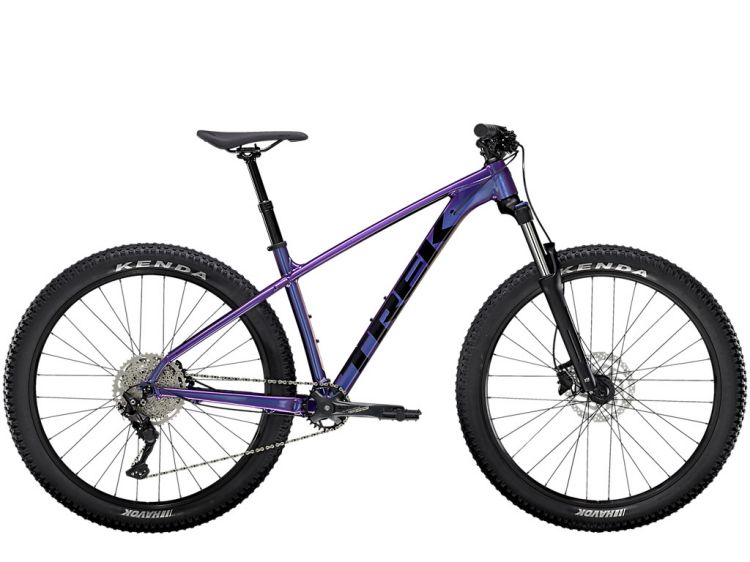
For another model in the family, see our Trek Roscoe 6 review. Treat that article as a separate model-year check, not proof that every Roscoe 6 shares this Roscoe 8’s frame and component package.
Pros and Cons
Pros
- 140mm air fork, 2.6-inch tires, dropper, and four-piston brakes create a coherent trail-control package.
- Boost thru-axles and tubeless-ready rims provide a modern foundation for wheels and tires.
- 1×12 gearing is simple to operate and includes an appropriately low trail gear.
- A hardtail avoids rear-shock and linkage service while keeping direct pedaling feedback.
Cons
- No rear suspension means more fatigue and less composure on repeated rough impacts.
- Wide trail tires and a 140mm fork are unnecessary drag and complexity for mostly smooth riding.
- The mixed NX/GX system is useful but should not be mistaken for a complete premium GX group.
- Used suspension, brakes, tubeless parts, and 12-speed drivetrains can require immediate service.
Used Trek Roscoe 8 Inspection Checklist
- Confirm identity: verify model year, serial information, frame size, wheel size, and installed components. Do not value it from the “Roscoe 8” name alone.
- Frame and fork: inspect the head tube, down tube, bottom bracket, chainstays, dropouts, fork crown, steerer area, and stanchions for cracks, dents, deep scratches, corrosion, or crash damage.
- Suspension: check air pressure, sag, smooth travel, rebound response, lockout behavior, leaks, noise, and service records.
- Wheels and tires: check rim dents, spoke tension, hub play, freehub engagement, tire casing damage, sealant age, and whether both wheels hold air.
- Brakes: inspect pad life, rotor thickness and alignment, hose condition, lever feel, leaks, and contamination. Test braking at low speed in a safe area.
- Drivetrain: measure chain wear and inspect the chainring, cassette, derailleur, hanger, cranks, and bottom bracket. Shift through all gears under light load.
- Dropper and controls: confirm the post returns smoothly, stays at the selected height, and has no excessive movement. Check every control and cable or hose route.
- Total cost: add the asking price to expected tires, sealant, brake service, suspension service, drivetrain parts, bearings, and shop labor before deciding value.
Safety note: stop riding if you find a crack, significant dent, loose steering component, leaking brake, damaged hose, severely worn rotor, loose wheel, or serious fork problem. Ask a qualified bicycle mechanic to inspect uncertain structural, braking, or suspension issues.
2022–2023 Trek Roscoe 8 Specifications
These are manufacturer-listed specifications for Trek’s archived U.S. product page. Actual production parts may have been substituted, and a used bike may have been upgraded or repaired.
| Area | Archived specification |
|---|---|
| Frame | Alpha Gold Aluminum; tapered head tube; internal derailleur and dropper routing; ISCG 05; threaded bottom bracket; Boost148 12mm thru-axle |
| Fork | RockShox 35 Gold RL; DebonAir; Motion Control; lockout; Boost110; 140mm travel; 37mm offset XS, 44mm S–XL |
| Wheels | Line Comp 30 Tubeless Ready rims; Rapid Drive 108 rear hub; Boost110 front and Boost148 rear |
| Tires | Bontrager XR4 Team Issue, Tubeless Ready, 120 tpi; 27.5×2.60″ XS, 29×2.60″ S–XL |
| Shifter / derailleur | SRAM NX Eagle 12-speed shifter; SRAM GX Eagle rear derailleur |
| Crank / cassette | SRAM X1 DUB 30T crank; SRAM PG-1230 Eagle 11–50 12-speed cassette |
| Brakes | Shimano MT4100 hydraulic lever and MT420 four-piston caliper; RT66 203mm and 180mm rotors |
| Dropper | TranzX JD-YSP18; 100mm XS/S, 130mm M, 150mm ML/L/XL |
| Listed weight | Medium: 13.54 kg / 29.86 lb with TLR sealant and no tubes; production weight varies |
| Maximum total weight | 300 lb / 136 kg combined bicycle, rider, and cargo—not a 300 lb rider-only limit |
Video
This owner video offers one long-term perspective. Confirm that its model year and setup match the bike you are considering.
Trek Roscoe 8 Alternatives
These bikes take different approaches to hardtail trail riding. Compare the exact model year, fit, fork, brakes, drivetrain, seller support, and current price before buying.
| Alternative | What to compare | Check availability |
|---|---|---|
| Marin Team Marin 2 | Generation, fork travel, brakes, drivetrain, intended XC/trail balance, and current price | Marin listings |
| KHS BNT 29 | Exact model year, wheel size, fork, drivetrain, service support, and whether it matches your trail use | KHS BNT 29 |
| Vitus Sentier 29 VRX | Availability, seller support, warranty status, installed components, and current price | Vitus listing |
| Trek Roscoe 9 | Current generation, fork and drivetrain upgrades, price difference, size, and local availability | Trek search · Roscoe offers · Trek range |
Marin Team Marin 2: Faster, More XC-Oriented Direction
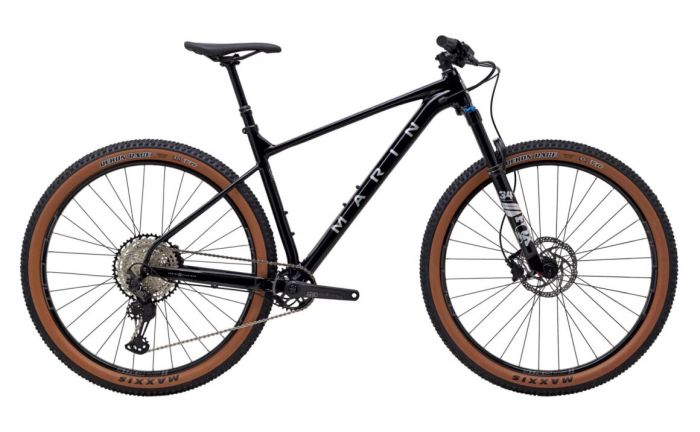
A Team Marin 2 can make more sense if speed on smoother trails and cross-country efficiency matter more than the Roscoe’s 140mm-fork, 2.6-inch-tire approach. The models are not interchangeable simply because both are aluminum 29er hardtails. Compare fit, current fork travel, brakes, tires, and intended terrain.
Our related Marin San Quentin 2 review covers a different Marin trail hardtail. Do not apply that bike’s components directly to the Team Marin 2.
KHS BNT 29: Verify the Exact Build
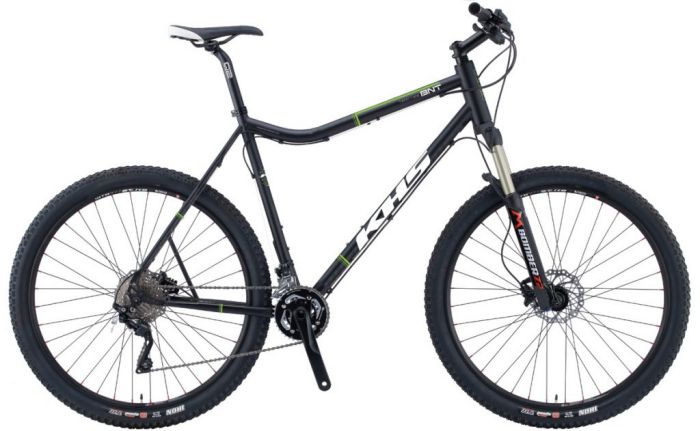
Compare the exact KHS product sheet, local service support, suspension, drivetrain range, brakes, fit, and price. The Roscoe’s key reference points remain its 140mm fork, dropper, four-piston brakes, and 2.6-inch tires.
For another KHS model, see our KHS Aguila review. It is not a substitute for checking the BNT 29 itself.
Vitus Sentier 29 VRX: Availability and Support Matter
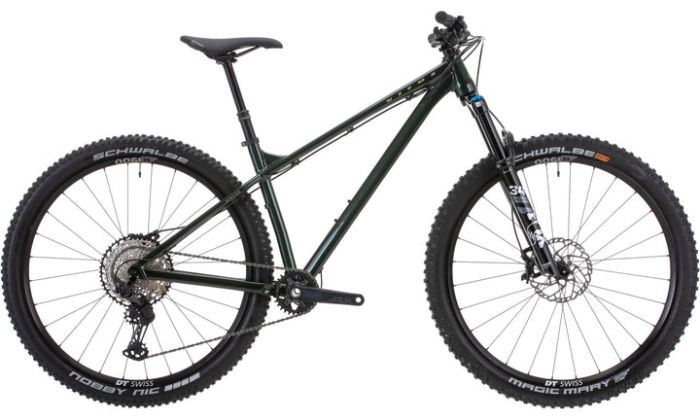
A Sentier 29 VRX may appeal to riders comparing fork quality and component value. Availability, warranty handling, replacement support, and the precise model year are critical, especially when an older listing remains indexed. A parts-list advantage is less useful if the size is wrong or after-sales support is unclear.
Read our Vitus Sentier 29 VRX review, then verify every time-sensitive specification against the seller’s current page.
Trek Roscoe 9: Pay More Only for Upgrades You Need
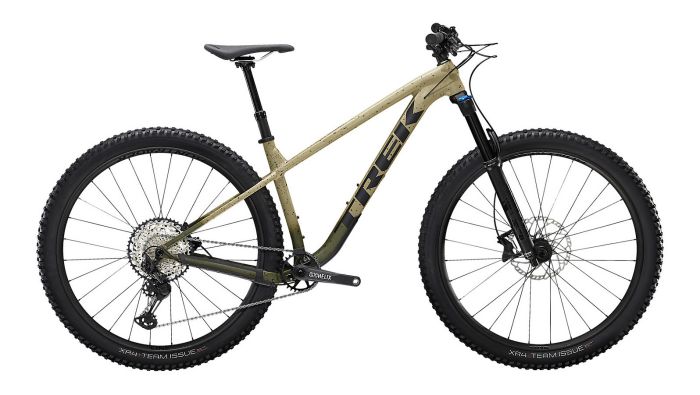
The Roscoe 9 is the most direct family alternative. Compare the fork, drivetrain, brakes, wheels, price gap, and service history for the exact year. A higher model number does not automatically make it the better buy if the Roscoe 8 already meets your needs or if the used Roscoe 9 requires expensive work.
See our Trek Roscoe 9 review, while keeping model-year differences in mind.
Trek Roscoe 8 FAQ
Is the 2022–2023 Trek Roscoe 8 good for a beginner?
It can be, provided the bike fits and the rider starts on terrain appropriate to their skills. The dropper, strong brakes, wide tires, and low gearing are useful, but no component replaces coaching, gradual progression, protective equipment, and good judgment.
Does every Roscoe 8 use 27.5-inch wheels?
No. For this archived 2022–2023 model, Trek lists 27.5×2.60-inch tires only on XS. S through XL use 29×2.60-inch tires. Other generations may differ.
Is the Roscoe 8 tubeless ready?
The archived build lists tubeless-ready rims and tires, rim strips, and sealant. A used bike still needs inspection because tape, valves, tires, and sealant age or damage over time.
Is it a full GX Eagle drivetrain?
No. It uses a GX Eagle rear derailleur with NX Eagle shifter and chain, an X1 crank, and a PG-1230 cassette. Describe it as a mixed SRAM Eagle drivetrain.
Can the fork be increased to 150mm?
The original specification table listed 150mm as the maximum compatible fork travel. Compatibility also depends on steerer, axle, offset, wheel, brake, crown clearance, and setup. Ask Trek or a qualified mechanic to confirm an exact fork before changing it.
What is the Roscoe 8 weight limit?
Trek lists a 300 lb / 136 kg maximum total weight for this model. That combines the bicycle, rider, and cargo; it is not a 300 lb rider-only rating. Component limits and condition can impose additional constraints.
What is a used Trek Roscoe 8 worth?
There is no responsible single price without location, size, condition, parts, and service history. Compare recent local listings, then subtract for suspension service, brake work, worn drivetrain parts, damaged tires or rims, and other repairs. A serviced bike at a higher asking price may be better value than a neglected bargain.
Final Verdict
The 2022–2023 Trek Roscoe 8 makes sense for riders who want a trail-focused hardtail with useful control components already included. Its 140mm fork, size-appropriate 2.6-inch wheels, dropper, four-piston brakes, and low 1×12 gearing are the main reasons to choose it. Its firm, unsuspended rear end remains the main limitation on repeated rough impacts.
For mostly smooth riding, choose a lighter, faster-rolling bike. For repeated rough descents where comfort and rear-wheel tracking matter most, compare a suitable full-suspension model. For a used Roscoe 8, fit, condition, and the total service bill should decide the purchase.
Sources
- Trek Roscoe 8 product archive, 2022–2023 model 5260381 — frame, fork, wheels, drivetrain, brakes, weight, and size-specific parts. Checked August 23, 2026.
- RockShox 35 Gold RL service page — component identification and service information. Checked August 23, 2026.
- Shimano BR-MT420 product page — four-piston caliper description. Checked August 23, 2026.
Specifications can vary by market, production substitution, and later owner changes. Verify the components fitted to the bike you plan to buy.