

The specifications below describe the UltraSport 2.0 in KHS’s 2023/24 catalog. KHS used the same model name in earlier years, so confirm the model year and installed components before buying.
Quick verdict
The 2023 KHS UltraSport 2.0 makes the most sense as a practical fitness and mixed-surface bike. Its aluminum frame, 700 × 40c tires, 80 mm suspension fork and wide-range 2×8 drivetrain suit paved paths, everyday errands and smoother unpaved routes. It is not an electric bike, a fast road bike or a technical-trail mountain bike.
Buy it when the fit is right, the mechanical disc brakes are adjusted well and the price reflects its entry-level components. Skip it if you want hydraulic braking, a lighter rigid fork, a simpler 1x drivetrain or a bike designed for rough singletrack.
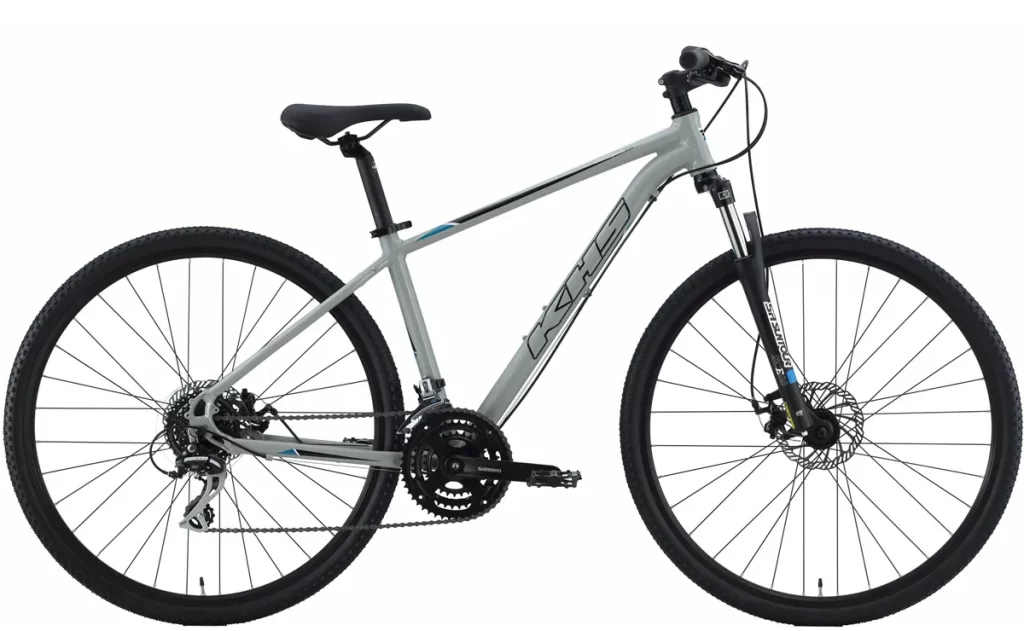
2023 KHS UltraSport 2.0 at a glance
| Category | 2023/24 KHS catalog specification | What it means for a buyer |
|---|---|---|
| Frame | 6061 custom-formed aluminum | A conventional, corrosion-resistant fitness-bike frame; inspect dents, welds and alignment on a used example. |
| Fork | SR Suntour XCE28, 80 mm travel | Adds comfort and control on broken pavement and mild gravel, but also weight and maintenance compared with a rigid fork. |
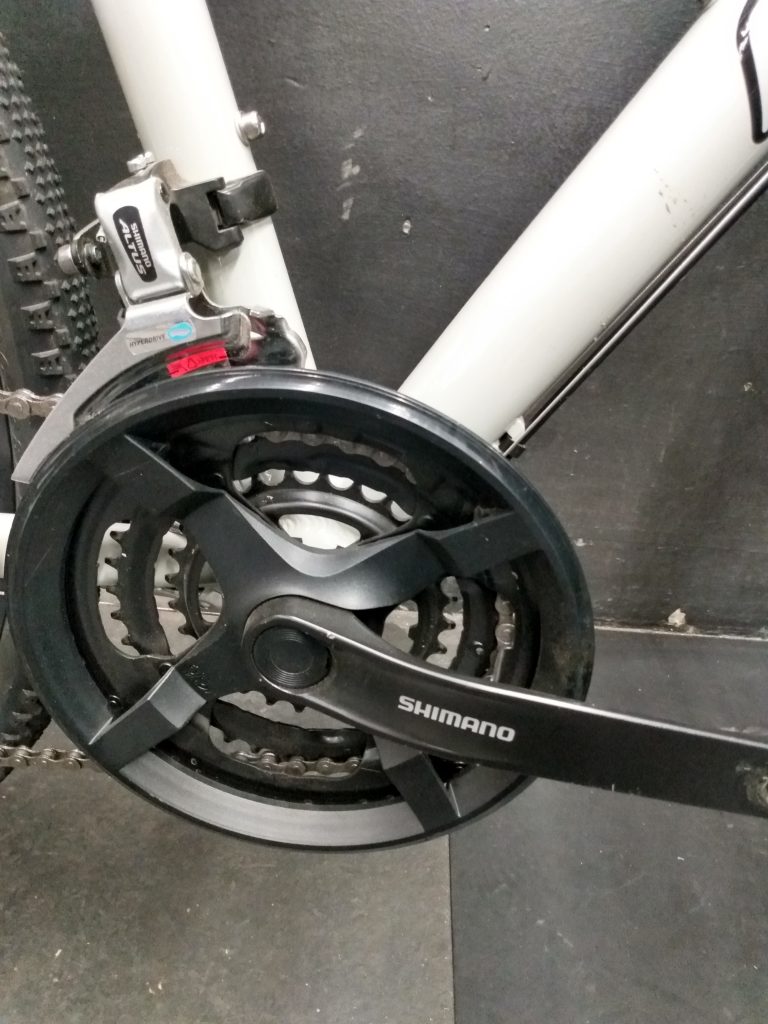
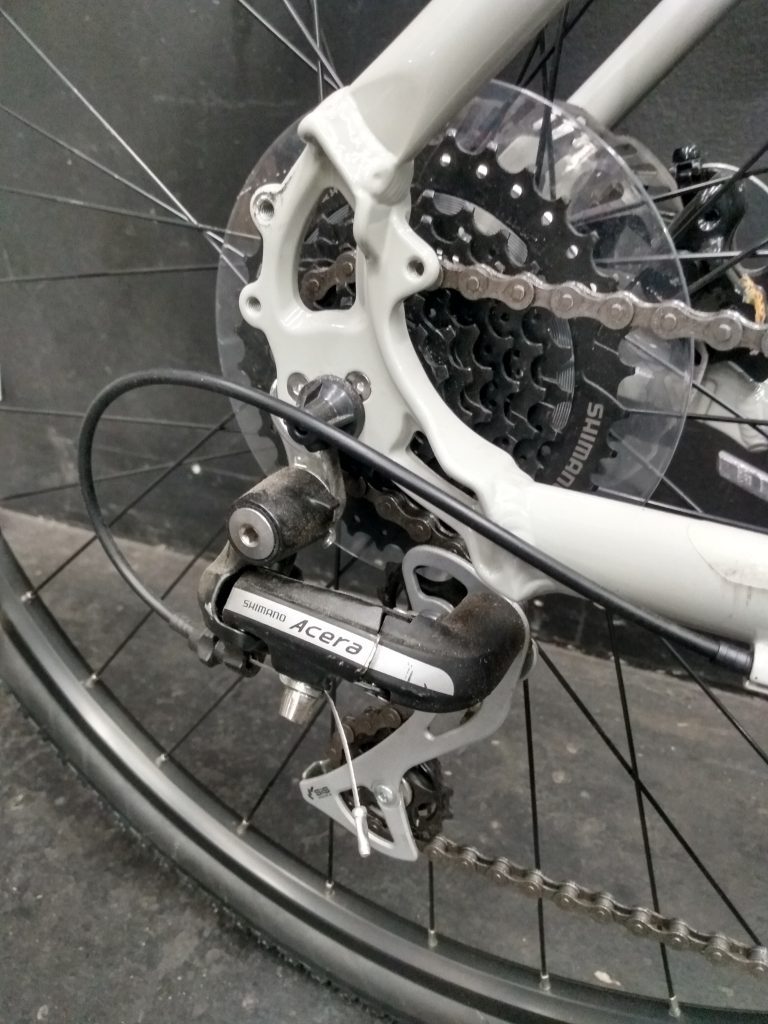
| Drivetrain | 16-speed (2×8); 46/30T crank; Shimano CS-HG400-8, 11–40T cassette | A broad range for flats and climbs, with a front derailleur that requires two-shifter coordination. |
| Shifting | Shimano SL-M315 trigger shifters; Shimano Acera rear derailleur; Shimano FD-TY606 front derailleur | Serviceable, value-oriented equipment rather than performance-level hardware. |
| Brakes | Bengal MB606 cable discs, 160 mm rotors, ABS/BrakeSafe system | Mechanical discs are straightforward to service, but lever feel and setup are important. |
| Wheels and tires | Double-wall aluminum rims; Kenda Happy Medium 700 × 40c, 30 TPI tires; quick-release hubs | The tire volume supports mixed-surface use; quick releases should be correctly secured and checked. |
| Catalog frame sizes | S/15, M/17, L/19, XL/21 and XXL/23 | Size labels are only a starting point—confirm standover, reach and control position in person. |
| Catalog price | Not listed on the 2023/24 catalog page | Ask for the original receipt and compare current local listings by size, condition, service history, and warranty. |
KHS lists this configuration on page 57 of its 2023/24 Bicycle Catalog. Regional builds and production substitutions can differ, so check the serial number and installed parts on the bike itself.
Who is this bike for?
- Fitness riders: You want a stable flat-bar position and more tire volume than a road bike.
- Mixed-surface commuters: Your route combines pavement, patched roads, park paths and mild gravel.
- Recreational riders: You value useful gearing and comfort more than low weight or racing speed.
- Buyers who use a local shop: A properly sized and adjusted example can be a better purchase than a cheaper bike with poor assembly.
Who should skip it?
- Riders planning jumps, rock gardens, steep technical trails or aggressive downhill use.
- Road-focused riders who would benefit more from a rigid fork, narrower tires and lower overall weight.
- Buyers who specifically want hydraulic disc brakes or a modern 1x drivetrain.
- Anyone who cannot confirm fit. A bargain in the wrong frame size is still the wrong bike.
Why the model year matters
KHS reused the UltraSport 2.0 name across model years. The 2021 and 2023 bikes share the same general purpose, but several drivetrain, control, and color details changed. That distinction matters when ordering replacement parts, judging a listing, or comparing value.
| Item | 2021 specification | 2023/24 specification |
|---|---|---|
| Front derailleur | Shimano FD-TY710 | Shimano FD-TY606 |
| Cassette | Shimano CS-HG31-8, 11–34T | Shimano CS-HG400-8, 11–40T |
| Brake levers | Shimano ST-EF500 | Promax all-aluminum linear-pull levers |
| Colors | Matte Black or Cloud Gray; separate ladies’ Black or Deep Teal version | Matte Black or Green, with size/color limits noted in the catalog |
You can compare the earlier configuration on the official 2021 KHS product page. If a seller describes the bike as a 2023 model, compare its serial number, receipt, and drivetrain photos with the correct model-year specification before buying.
How the 2023 build should ride
The 700c wheels and 40 mm tires should roll efficiently on pavement while adding more cushioning and grip than a narrow road tire. The 80 mm fork can take the edge off potholes, curb transitions, and washboard surfaces when it is correctly set up and maintained.
The trade-off is that an entry-level suspension fork adds mass and can move under hard pedaling. Riders who stay almost entirely on smooth roads may prefer a rigid-fork fitness bike. Riders who regularly leave the pavement can appreciate the extra margin, but the UltraSport 2.0 still lacks the tires, geometry and suspension control expected of a trail mountain bike.
Gearing: useful range, older-school controls
The 46/30T crank and 11–40T eight-speed cassette provide a genuinely broad range. The 30-tooth inner chainring paired with the 40-tooth largest sprocket is the climbing combination; the 46-tooth outer ring supports faster paved riding. Shimano’s official CS-HG400-8 product page (bike.shimano.com) confirms that it is an eight-speed Hyperglide cassette offered in an 11–40T range.
A 2x system does require more attention than a 1x drivetrain. Avoid extreme chain angles, ease pedal pressure during shifts and expect cables to need adjustment as they settle. None of that makes the bike unsuitable for a beginner, but a clear shifting demonstration should be part of the handover.
Mechanical disc brakes: setup matters
The Bengal MB606 brakes use cables rather than hydraulic hoses. That usually makes roadside diagnosis and basic servicing straightforward, but it also means cable condition, caliper alignment and pad clearance strongly affect the result. Before buying, confirm that both levers feel firm, both wheels rotate without severe rubbing and the bike stops in a straight line. A brake that reaches the handlebar, a contaminated rotor or damaged cable housing needs attention before riding.
Fit and sizing checks
KHS listed five diamond-frame sizes in the 2023/24 catalog: 15, 17, 19, 21 and 23 inches. Those labels do not tell the whole story. Two riders of the same height can need different reaches because of torso, arm and leg proportions.
- Stand over the frame in riding shoes and confirm comfortable clearance.
- Set saddle height so the knee retains a slight bend at the bottom of the pedal stroke.
- Check that you can reach both brake levers without stretching or locking the elbows.
- Ride slowly, turn in both directions and confirm that knees, toes and controls do not interfere.
- If between sizes, have a KHS dealer or experienced fitter compare the complete position—not only standover height.
Used-bike and leftover-stock inspection
By 2026, a 2023 UltraSport 2.0 may be used, ex-display or old dealer stock. Condition and setup can matter more than a small price difference. Use this checklist before paying:
- Identity: Match the frame, color, size label, receipt and component photos to the claimed model year.
- Frame and fork: Look for cracks, deep dents, bent dropouts, corrosion, leaking seals or scratched fork stanchions. Do not ride a structurally suspect bike.
- Wheels: Spin each wheel and check for large wobbles, loose spokes, rim damage and rough hub bearings.
- Drivetrain: Shift through every combination during a controlled test. Watch for skipping, a hooked cassette or a chain that lifts from the chainring.
- Brakes: Inspect pad life and rotor condition, then test both brakes independently at low speed.
- Tires: Check sidewall cracking and tread wear. A bike that sat unused for years can still need new rubber.
- Fit: Do not let a discount override an obviously wrong frame size.
- Repair budget: Price cables, pads, tires, chain, cassette and fork service before comparing the total cost with a newer bike.
First setup and ownership priorities
A correct first setup can change how this bike feels more than a small component upgrade. Start with the tire manufacturer’s pressure range, then adjust within that range for rider mass, surface and load. A lower pressure can improve comfort and grip on rougher surfaces, while too little pressure raises the risk of rim strikes and vague handling. Inspect pressure before every ride rather than relying on a squeeze test.
Next, ask the assembler to center the brake calipers, set lever reach where possible and confirm that both wheels are fully seated in the quick-release dropouts. The levers must close with firm resistance and face a position that cannot catch easily. If you are not already confident with quick releases, have a shop demonstrate the closing force and final lever orientation.
The drivetrain should change one gear for each shifter click without chatter. New cables can settle after the first rides, so a minor barrel-adjuster correction or shop follow-up is normal. Keep the chain clean and lubricated, wipe away excess lubricant and check chain wear before it damages the cassette. Cross-chaining—using the largest chainring with the largest rear sprocket, or the smallest with the smallest—adds noise and avoidable wear.
Finally, set the saddle for control as well as leg extension, confirm every safety-critical fastener to the manufacturer’s instructions, and add lights or reflective equipment for low-light travel. If the bike will carry luggage, ask KHS or a dealer to confirm that the exact frame and chosen rack or fender hardware are compatible.
Pros and cons
Reasons to buy
- Wide 2×8 gearing for varied gradients
- 40 mm tires balance paved efficiency and mild-surface comfort
- Mechanical disc brakes are familiar to many local shops
- Five catalog frame sizes broaden the fit range
- Useful all-round format for fitness, errands and recreation
Reasons to look elsewhere
- Entry-level suspension fork adds weight and service needs
- Cable discs lack the light lever feel many hydraulic systems provide
- Two chainrings are less simple than a 1x drivetrain
- Not designed for technical mountain-bike trails
- KHS does not list a complete-bike weight or rider/system weight limit for this configuration in its 2023/24 catalog
Alternatives to consider
Compare these alternatives by fit, current specification, warranty, local service, and total assembled price. The same model name can cover several different years.
| Alternative | Why shortlist it | Check availability |
|---|---|---|
| Giant Roam Disc 3 | A familiar mixed-surface category; compare current fork, brakes, gearing and local dealer support. | Check listing |
| Co-op CTY 2.1 | Worth comparing if retail support, straightforward commuting use and a current warranty matter most. | Check listing |
| Schwinn Network 3.0 | A comfort-oriented direction for casual paved rides; assembly quality and exact year specification need checking. | Check listing |
| Cannondale Adventure 1 | A more upright comfort-bike direction; compare posture, dealer setup, and equipment for the exact model year you are considering. | Check listing |
Giant Roam Disc 3
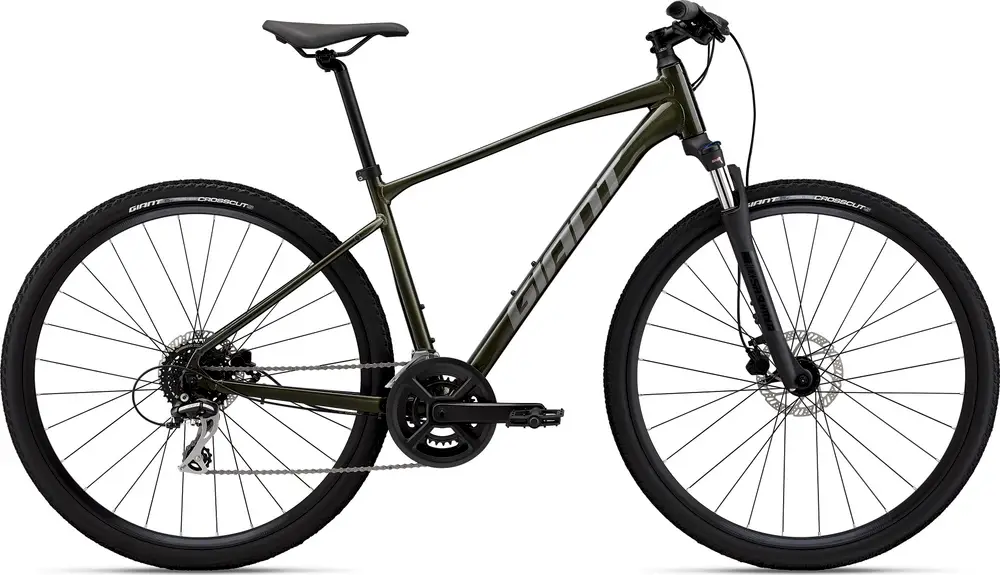
Shortlist the Roam when local Giant availability or dealer support is stronger. Compare the exact model-year brakes, fork, gearing, tire clearance and final assembled price. Related review: Is Giant Roam Disc 3 Worth Buying? – [Giant Roam Disc 3 Review]
Co-op CTY 2.1
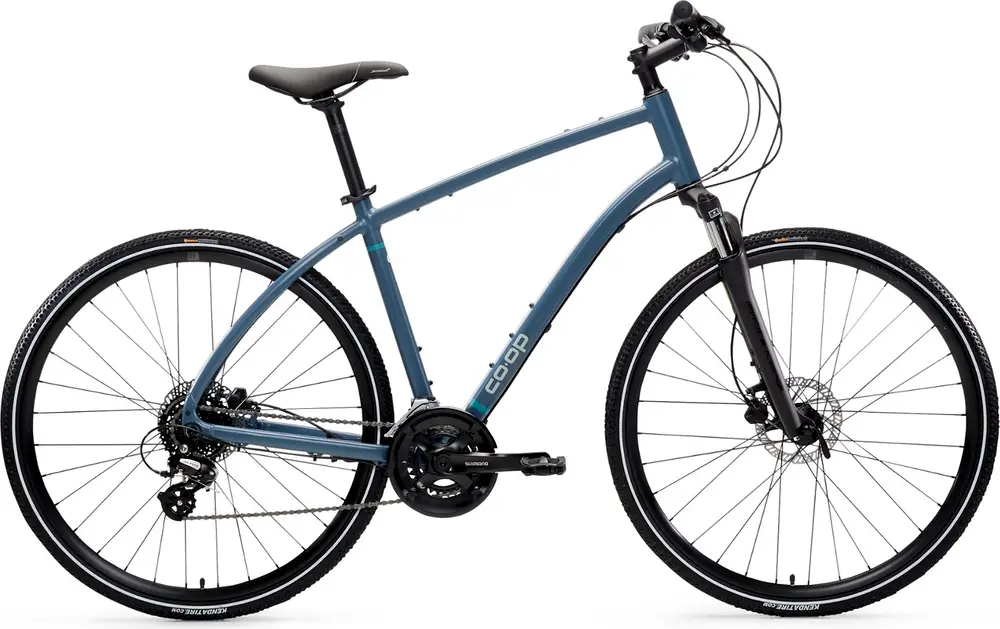
Consider the CTY line when you want a city-first bike and value the retailer’s sizing, returns, and service options. Check the current product page for its frame and fork materials because specifications vary by year.
Schwinn Network 3.0
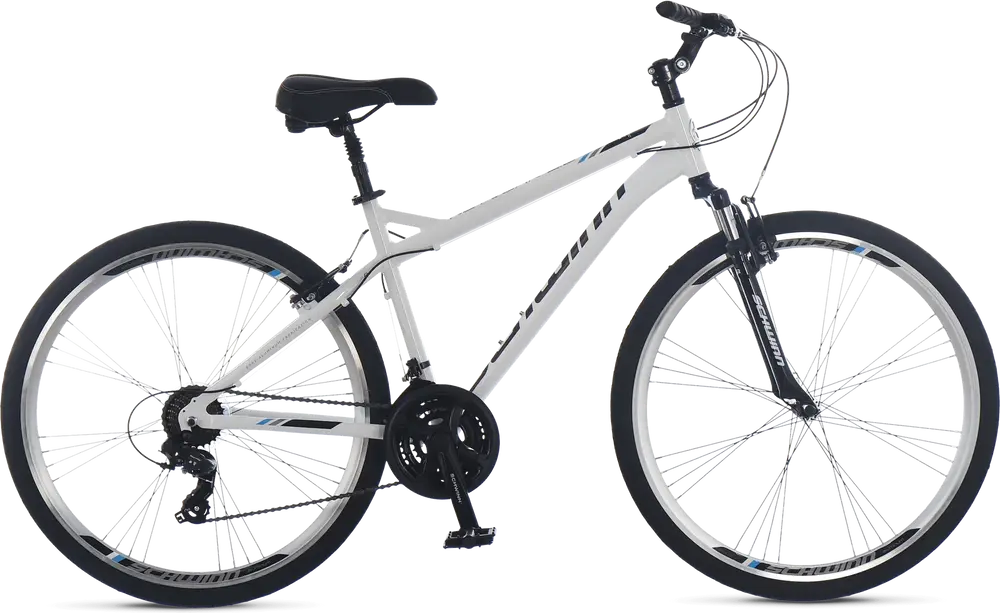
The Network is a comfort-oriented alternative for lower-intensity paved riding. Budget for professional assembly if it arrives boxed, and compare the real size range and brake setup rather than choosing from headline gear counts alone. Related review: Is Schwinn Sierra Worth Buying?[Schwinn Sierra Review ]
Cannondale Adventure 1
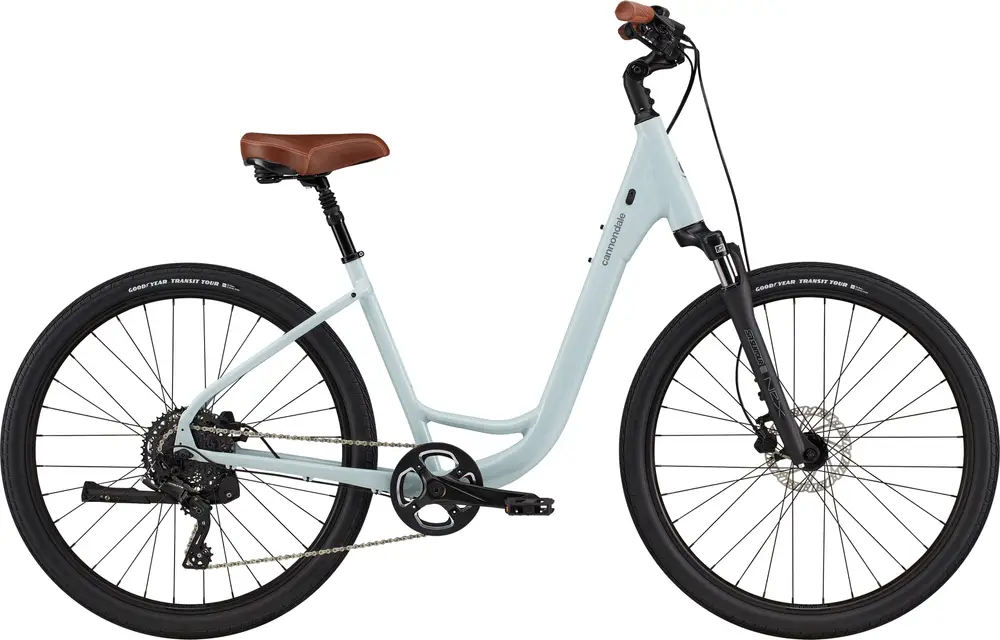
The Adventure line is a useful comparison when a more upright, comfort-led position is the priority. Test the riding position and compare the current model-year components at a dealer. Related review: Is Cannondale Quick 3 A Good Bike? [Cannondale Quick 3 Review]
Frequently asked questions
Is the KHS UltraSport 2.0 an electric bike?
No. The 2023 UltraSport 2.0 is a conventional pedal bicycle with no motor or battery.
Is it a road bike or a mountain bike?
Neither in the specialist sense. KHS places it in the UltraSport fitness family. Its flat bar, 700c wheels, 40 mm tires and short-travel fork create a hybrid format for paved and mild unpaved surfaces.
Does it have hydraulic disc brakes?
No. The catalog lists Bengal MB606 cable-operated disc brakes with 160 mm rotors and the BrakeSafe/ABS system. Evaluate the actual bike’s braking setup during inspection.
Can it handle gravel?
The specification is reasonable for maintained gravel roads, hard-packed paths and similar mild surfaces. Tire pressure, rider skill and conditions matter. Loose, steep or technical terrain calls for more suitable tires and a true mountain-bike platform.
What is the rider weight limit?
KHS does not publish a rider or total-system weight limit on the 2023/24 catalog page. Ask KHS or an authorized dealer for the limit that applies to the exact frame, including rider, luggage, and accessories.
What should a 2023 UltraSport 2.0 cost now?
There is no reliable universal number. Location, size, condition, service history, consumable wear and dealer support all affect value. Compare the complete cost after required repairs with current fitness and hybrid bikes available in your market.
Video
Use this video to compare the frame shape and visible components, but confirm that the bike shown matches the year and configuration you are considering.
Final verdict
The 2023 KHS UltraSport 2.0 is worth considering for practical fitness riding, commuting and smoother mixed surfaces—provided the fit, condition and price are right. Its strongest feature is not one premium component; it is the useful combination of 40 mm tires, a wide 2×8 range and a comfort-oriented fork. Its limitations are equally clear: basic suspension, cable discs and no technical-trail intent.
For a new-old-stock or used example, insist on a safe test, accurate year identification, and a repair-cost estimate. Those checks matter more than any single numerical rating.